Overhead Garage Storage Racks by Overhead Storage of Phoenix

Are Ceiling Racks Worth It for Phoenix Garages?

Are Ceiling Racks Worth It for Phoenix Garages?

A garage floor disappears fast. One weekend project, a few storage bins, holiday decorations, camping gear, and kids’ bikes can turn a two-car garage into a narrow path between piles. If you are asking, are ceiling racks worth it, the answer is usually yes when you need real storage without giving up valuable floor space.

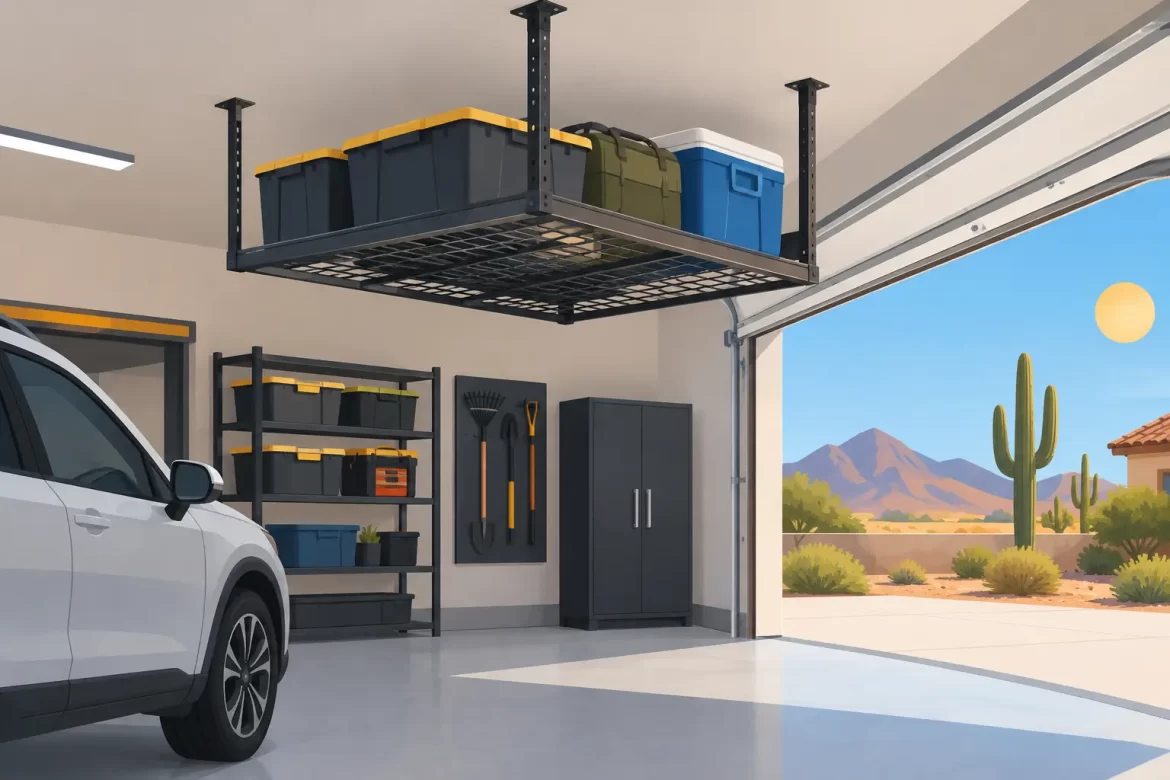
For Phoenix-area homeowners, overhead garage storage is especially useful because many belongings are used only part of the year. Coolers, patio accessories, seasonal decor, luggage, and keepsake bins do not need to sit at ground level every day. A properly installed ceiling rack puts those items overhead, where they are accessible when needed but out of the way the rest of the time.

The key word is properly. Ceiling storage is worth the investment when the rack is built for the job, anchored correctly, and sized around your garage and the items you plan to store.

Are Ceiling Racks Worth It for Your Garage?

Ceiling racks are worth it when your garage has usable overhead space and your storage problem is mostly bulky, seasonal, or infrequently used items. They create storage where there was previously empty air, which means you can reclaim the floor for vehicles, workbenches, fitness equipment, or simply easier movement through the garage.

This is not a temporary fix like stacking bins against a wall. A quality overhead rack gives your belongings a defined home. Instead of shifting boxes from one corner to another, you can organize them by season or use, label the bins, and keep the garage looking cleaner year-round.

The value is especially clear in garages where every square foot matters. A 4-by-8 overhead rack provides 32 square feet of storage footprint without taking up 32 square feet of floor space. Install more than one rack, and the difference can be dramatic.

For homeowners who want to park inside their garage again, that added clearance is often the reason ceiling racks pay off quickly.

What Makes an Overhead Rack Worth the Money?

Not all ceiling storage systems are built the same. Low-cost racks may appear similar in a photo, but their steel thickness, connection points, mounting hardware, decking, and weight ratings can vary significantly. Storage that hangs above a vehicle, a work area, or a walkway should never be selected on price alone.

A worthwhile rack starts with heavy-duty steel construction and a clearly stated safe working limit. Overhead Storage of Phoenix installs OHSP rack systems made with 14-gauge steel, boltless shelving frames, a white powder-coated finish, and anti-shake decking. Their 4-by-8 racks have a safe working limit of 1,000 pounds and are tested up to 2,000 pounds in perimeter-mounted configurations.

Those numbers matter, but safe storage is about more than a high weight rating. The rack must be mounted into the right structural points in the ceiling. The load must be distributed correctly. The rack also needs to remain stable when you load bins or retrieve items. A system that shakes, swings, or feels loose is not a system most homeowners want above their garage floor.

That is why professional installation is part of the value. An experienced installer evaluates the ceiling layout, identifies appropriate mounting locations, accounts for garage-door travel and lighting, and places the rack where it will be useful without interfering with daily life.

Floor Space Is the Biggest Return

The most obvious benefit is getting clutter off the floor, but the real return is what that open floor lets you do. You may be able to fit both vehicles inside. You may finally have space for a tool bench or a hobby area. You may be able to sweep the garage without moving ten containers first.

A clean, usable garage also makes it easier to find what you own. When camping bins, holiday decorations, and automotive supplies are separated and stored overhead, you spend less time digging through piles and less money replacing items you already have.

Better Protection for Stored Belongings

Keeping belongings off the garage floor can also help protect them from everyday problems. A leaking water heater, a rainstorm that blows water under the garage door, spilled lawn chemicals, or an unexpected pest issue can damage floor-level boxes quickly.

Overhead racks keep suitable items elevated and organized in durable plastic bins. For Arizona homeowners, that often means less dust gathering on loose boxes and fewer items getting crushed under heavier gear. The rack does not replace smart storage habits, but it gives your belongings a safer place to live.

What Should You Store on Ceiling Racks?

The best items for overhead storage are things you need occasionally, not every morning. Holiday decorations, empty luggage, coolers, camping gear, sports equipment, seasonal clothing bins, keepsakes, and party supplies are all strong candidates.

Use sturdy, lidded plastic bins whenever possible. Clear bins can make it easier to identify contents, while solid-color bins paired with clear labels keep the rack visually tidy. Put heavier containers close to the rack’s supported areas and distribute weight evenly across the deck. Do not place one oversized, extremely heavy item in a single spot and assume the full rack rating applies to that one concentrated load.

Items used weekly or daily may be better stored on wall-mounted systems or shelves at eye level. A ceiling rack is designed to free your garage, not create an inconvenience. If you will need a leaf blower, tool bag, or sports bag constantly, give it a more accessible location.

When Ceiling Racks May Not Be the Right Fit

Overhead racks are not the answer to every garage-storage problem. If your ceiling is unusually low, your garage door and opener use most of the available overhead area, or you need frequent access to nearly everything you store, another storage approach may make more sense.

They are also not intended for unsafe or sensitive materials. Avoid storing flammable liquids, propane cylinders, hazardous chemicals, perishable goods, or anything that can leak, melt, or become dangerous in extreme heat. Phoenix garages get hot, and the temperature near the ceiling can be even higher. Heat-sensitive items, batteries, candles, and certain electronics should be stored in a climate-appropriate location instead.

Accessibility matters as well. Retrieving items from an overhead rack requires a stable ladder and careful lifting. Homeowners with mobility concerns may want frequently needed belongings kept lower, while reserving the ceiling for long-term storage.

None of these factors mean ceiling racks are a poor investment. They simply mean the design should fit your household, garage layout, and storage habits rather than following a one-size-fits-all plan.

Why Professional Installation Makes a Difference

A ceiling rack is only as reliable as its installation. Garage ceilings contain framing, electrical components, garage-door tracks, openers, and sometimes drywall that can hide important structural details. Guessing where to mount a heavy rack can create unnecessary risk.

Professional installation removes that guesswork. A trained installer can measure available clearance, locate proper attachment points, place the rack away from door operation, and confirm that the configuration works with your garage. You also get a cleaner finished result than a rack mounted around trial-and-error holes or awkward obstructions.

Customization matters here, too. One homeowner may need a single 4-by-8 rack above a side bay. Another may need several racks arranged around vehicles, cabinets, or a work area. The right layout stores more while keeping the garage open and practical.

The Bottom Line on Cost and Value

Ceiling racks cost more than a few plastic shelves or a stack of cardboard boxes, but they solve a different problem. They create durable storage without consuming the floor space you already need. When built from heavy-duty materials and professionally mounted, they can serve your garage for years while making the whole space easier to use.

The best value comes from choosing a system based on strength, stability, safe load capacity, and installation quality – not just the lowest advertised price. A rack that feels secure, resists shaking, and is designed around your actual garage is a home improvement that pays you back every time you walk into a cleaner space.

If garage clutter is keeping you from parking, working, or enjoying the space you already own, a professional overhead storage quote is a practical next step. Measure what is taking up your floor, think about what you use only seasonally, and let a storage specialist help turn that unused ceiling space into a safer, more organized part of your home.

Overhead Bin Storage Guide for Phoenix Garages

Overhead Bin Storage Guide for Phoenix Garages

A crowded garage rarely has a space problem. It has a floor-space problem. This overhead bin storage guide shows Phoenix homeowners how to move the right belongings overhead, choose a rack system that can handle the load, and keep the garage safer and easier to use.

Ceiling storage is not a place for flimsy shelves, loose containers, or guesswork. Your garage rack must be anchored correctly, built from heavy-duty materials, and sized around what you actually need to store. Done right, overhead storage gets bulky bins, seasonal decorations, camping equipment, and household overflow off the floor without turning your ceiling into a hazard.

Start With What Belongs in Overhead Bin Storage

The best items for overhead storage are useful but not needed every week. Think holiday decorations, labeled keepsake bins, seasonal clothing, party supplies, camping gear, coolers, extra household paper goods, and sports equipment that is between seasons. These items take up valuable floor space but do not need daily access.

Plastic storage bins with secure lids are usually the right choice. They stack cleanly, protect contents from dust, and make it easier to see what belongs in each area. Clear bins can help with quick identification, while solid-color bins work well when every container is clearly labeled on the front and lid.

Avoid storing anything overhead that is hazardous, temperature-sensitive, or frequently used. Gasoline, propane cylinders, paint, automotive chemicals, ammunition, and other dangerous materials should not go in ceiling-mounted storage. Neither should items you need to grab often, such as everyday tools, bicycles, or a child’s sports bag. A good storage plan puts occasional-use items overhead and keeps regular-use items within easy reach.

Phoenix heat is another factor. A garage can become extremely hot during summer, so avoid placing heat-sensitive belongings in bins above the garage. Candles, certain electronics, photographs, delicate vinyl items, and products that can melt or leak need a more controlled storage location.

Measure the Garage Before Choosing a Rack

A rack may look like it fits on paper but create problems once the garage door opens or a vehicle pulls in. Measure the open ceiling area, ceiling height, garage door tracks, lights, sprinklers, attic access, and the height of vehicles parked below. The goal is to use unused ceiling space without creating clearance issues.

Pay close attention to where the garage door travels. The space above the door can be useful, but only if the rack and stored bins stay clear of the door, opener, rails, and moving components. A professional installer can identify usable areas that are easy to miss and avoid locations that could interfere with safe operation.

Rack depth matters as much as length. A 4-by-8 overhead rack is a practical size for many garages because it holds a substantial number of bins without consuming the entire ceiling. Larger garages may benefit from several racks arranged around the perimeter. Smaller garages may need one carefully positioned rack that clears doors, lights, and parking areas.

Weight Capacity Is More Than a Number

Do not select ceiling storage based only on the lowest price or a large weight claim on a box. The strength of overhead storage depends on the steel, frame design, mounting method, fasteners, ceiling structure, decking, and installation quality. A rack is only as dependable as the system holding it in place.

Heavy-duty steel construction makes a real difference when bins are loaded with holiday décor, books, tools, or family keepsakes. Overhead Storage of Phoenix installs rack systems built with 14-gauge steel, boltless shelving frames, white powder-coated finishes, and anti-shake decking. Its 4-by-8 racks have a stated safe working limit of 1,000 pounds and are tested up to 2,000 pounds in perimeter-mounted configurations.

That does not mean every garage should be loaded to a maximum rating. The proper load depends on the rack configuration, mounting location, ceiling framing, and the weight distribution of the stored items. A few heavy bins concentrated in one corner are not the same as a balanced load spread across the rack. Professional planning helps ensure the system is suited to your garage rather than simply installed wherever there appears to be open space.

Load Bins the Smart Way

Before lifting bins overhead, take a few minutes to sort them by weight and frequency of use. Heavy bins should be manageable enough to lift safely and should be distributed across the rack. Keep lighter, bulky items such as artificial trees, empty luggage, or seasonal inflatables toward the edges or upper areas where appropriate.

A practical approach is to create zones. Put holiday items together, camping gear together, and household backstock together. Label every bin on more than one side, because the label facing the garage aisle may not be the label you see once the bin is on the rack.

Do not overfill containers just because the rack has a high weight rating. Extremely heavy bins are difficult to carry up a ladder and difficult to remove safely later. Several reasonably packed bins are more useful than one container that takes two people to move.

Why Rack Stability Matters

Some overhead storage products can shake, sway, or feel unstable when bins are placed on the decking. That movement is more than annoying. It can make homeowners hesitant to use the storage they paid for, and it raises concerns about the long-term security of the installation.

A stable system starts with a frame designed to resist movement and a mounting approach matched to the garage structure. Anti-shake decking helps prevent the rattling and shifting often associated with lighter rack designs. Proper fastening into suitable structural points is equally important. Drywall alone is not a mounting surface for a loaded overhead storage rack.

This is where professional installation earns its value. Ceiling framing is not always obvious, especially in garages with finished drywall, unusual layouts, soffits, or obstructions. An experienced installer can locate the correct mounting points, set the rack level, verify clearances, and make sure the finished system looks clean as well as secure.

Plan for Access, Not Just Storage

A rack that is packed full but impossible to reach is not an organized solution. Leave a clear path below the storage area and use a stable ladder rated for the task. Never stand on a vehicle, rolling chair, bucket, or makeshift platform to access overhead bins.

Keep the bins you access most often near the front edge of the rack. Items used once a year can sit farther back. If you have multiple racks, assign each one a purpose so you do not have to move ten containers to find one set of decorations.

It also helps to review your overhead storage twice a year. Before the holidays or a camping season, bring down the bins you expect to use and return the items that no longer belong on the garage floor. That simple reset keeps clutter from slowly reclaiming the space.

Get the Ceiling Storage Configuration Right

The strongest overhead bin storage plan is customized to the garage, the household, and the items being stored. It may be one 4-by-8 rack above an unused parking area, or several perimeter-mounted racks that turn dead ceiling space into a dependable storage zone. The right answer depends on your ceiling layout, vehicle clearance, storage volume, and how often you need access.

When the rack is professionally installed and the bins are loaded with a plan, the payoff is immediate: more room to park, more room to work, and less time stepping around piles on the floor. Start by looking up. Your garage ceiling may be the cleanest, strongest storage space you have not used yet.

Garage Ceiling Load Capacity Guide for Safe Storage

Garage Ceiling Load Capacity Guide for Safe Storage

A garage ceiling can turn unused airspace into valuable storage, but it is not a place to guess. This garage ceiling load capacity guide explains what homeowners need to know before putting bins, sports gear, holiday décor, or bulky household items overhead. The goal is simple: clear the garage floor without creating a safety concern above your vehicles, workbench, or family.

The right overhead rack can make a dramatic difference in an Arizona garage. The wrong rack, poor mounting method, or overloaded platform can put stress on framing that was never evaluated for that use. Safe overhead storage starts with the structure, then the storage system, then the way you load it.

Garage Ceiling Load Capacity Guide: Start With the Structure

Your garage ceiling’s capacity is not determined by drywall. Drywall covers the ceiling framing, but it does not safely support overhead storage racks, hooks loaded with heavy items, or a platform full of storage totes. A rack must be anchored into structural members such as ceiling joists or approved framing locations.

Joists are the horizontal framing members above the ceiling. Their size, spacing, span, wood condition, connections, and the loads already placed on them all affect what they can support. A garage built with engineered roof trusses deserves extra attention. Trusses are designed as complete engineered assemblies, and drilling into, cutting, or adding concentrated loads to the wrong location can create problems.

That is why two garages that look nearly identical from below may not be appropriate for the same overhead storage layout. A professional installation begins by locating framing and evaluating the available mounting area rather than treating every ceiling as interchangeable.

The ceiling rating is not the rack rating

Homeowners often see a rack rated for 600, 800, or 1,000 pounds and assume the ceiling can automatically carry that amount. Those are two separate ratings. The rack’s safe working load describes what the product can hold when properly installed under its stated conditions. The ceiling structure must also be able to support the rack, its contents, and the forces created where the system attaches.

A strong steel rack does not make a weak or unsuitable mounting location stronger. Likewise, a well-built garage ceiling cannot compensate for a light-duty rack that shakes, swings, or relies on undersized hardware. Both parts of the system need to work together.

How Much Weight Are You Actually Storing?

The best storage plan begins with a realistic inventory. People regularly underestimate the weight of stacked plastic bins, especially when they contain books, tools, canned goods, old paperwork, tile, automotive supplies, or dense holiday decorations. The empty tote may feel light. Ten full totes are another matter.

Before selecting a rack, group items by approximate weight and by how often you need them. Lightweight seasonal décor, luggage, camping supplies, and empty coolers are often good overhead candidates. Heavy tools, free weights, large containers of liquids, and frequently used equipment may be better kept lower, where access is easier and loading is more controlled.

Do not load a platform by filling it until there is no open space. Leave a margin below the system’s safe working limit. That margin accounts for imperfect estimates, future storage additions, and the fact that a garage tends to collect more belongings over time.

A practical approach is to weigh a representative loaded tote with a household scale, then multiply by the number of similar bins. Add the weight of loose items, shelving accessories, and the rack itself when planning the installation. If an item is awkward to lift safely, it may not belong overhead even if the total weight appears acceptable.

Weight Distribution Matters as Much as Total Weight

A rack can be under its listed capacity and still be loaded poorly. Concentrating the heaviest bins in one corner puts more stress on a smaller section of the platform and its connection points. A stable system spreads the load across the deck and places heavier items closer to supported areas when the rack design allows it.

Keep loads balanced from side to side. Avoid tall, unstable stacks that can shift when a garage door opens, a vehicle pulls in, or someone moves items around below. Containers with secure lids are a safer choice than loose boxes that can crush, tear, or spill after months in Phoenix heat.

Overhead Storage of Phoenix installs heavy-duty systems designed for stability, not the shaking and swinging common with lighter overhead products. Its 4-by-8 racks have a stated safe working limit of 1,000 pounds, with perimeter-mounted configurations tested up to 2,000 pounds. Those numbers are product-specific, not permission to place 1,000 pounds on every ceiling without a professional assessment and correct installation.

Use the right rack for the job

A useful rack should provide more than a large advertised number. Look at the frame material, steel thickness, hardware, deck design, connection points, and how the system manages movement. A rack that flexes or sways makes storage harder to access and can make homeowners understandably uneasy.

Heavy-duty 14-gauge steel, a boltless shelving frame, anti-shake decking, and a durable powder-coated finish are meaningful construction details because they support long-term stability. Still, quality materials are only part of the answer. Proper placement and secure attachment to the garage structure are what make the system perform as intended.

Ceiling Conditions That Need Extra Caution

Some garage conditions call for a closer look before any overhead storage is planned. Water staining, sagging drywall, visible cracks, termite damage, prior roof leaks, or altered framing should be addressed before adding a new load. Storage racks should never be used to hide a ceiling issue.

Garage-door tracks, openers, attic access panels, lights, sprinklers, electrical boxes, and HVAC equipment also affect placement. The rack needs enough clearance for the garage door to operate, vehicles to park, and people to safely carry items in and out. A convenient-looking spot may not be a safe mounting zone once all of these conflicts are considered.

In Arizona, temperature is another practical consideration. Garages can get extremely hot, and some belongings do not store well overhead. Batteries, candles, paint, certain chemicals, delicate photographs, and heat-sensitive electronics should be stored according to manufacturer guidance rather than placed on a ceiling rack simply to get them out of sight.

Why Professional Installation Is Worth It

Mounting an overhead rack is not the same as hanging a picture or installing a wall shelf. The installer must locate suitable structural attachment points, account for the rack dimensions and intended load, use appropriate hardware, level the system, and verify that it is stable before it is loaded.

Professional installation also helps homeowners get the layout right the first time. The best configuration depends on ceiling height, garage-door clearance, vehicles, existing cabinets, attic access, and what you actually plan to store. A rack placed too low may interfere with parking. One placed too high may be difficult to use safely. The answer is not always the biggest rack possible. It is the rack that creates usable storage while keeping the garage comfortable and functional.

Once installed, inspect your system periodically. Check for loose hardware, damage, unusual movement, corrosion, or a changed ceiling condition. Do not add weight beyond the original plan just because there is open deck space. If you are unsure about a new load or a change to the rack, have it reviewed before storing it overhead.

A clean garage should feel safer, not more complicated. When the framing, rack, installation, and load plan all match, overhead storage gives your belongings a dependable home and gives your garage floor back to you. Request a professional estimate before you load up the ceiling, and build storage space you can trust for years.

1000 Pound Garage Rack for Heavy Storage

1000 Pound Garage Rack for Heavy Storage

A 1000 pound garage rack is not just a place to stack a few plastic totes. It is a serious overhead storage solution for homeowners who are tired of losing valuable garage floor space to bulky bins, holiday decorations, camping gear, tools, and seasonal items. When the rack is properly designed, mounted, and loaded, it gives you a cleaner garage without forcing you to throw away the things your household actually uses.

For Phoenix-area homeowners, overhead storage makes particular sense. Garages often become the default holding area for pool supplies, winter items, moving boxes, kids’ gear, and the equipment that does not fit comfortably inside the home. The problem is not owning those items. The problem is letting them take over the floor.

What a 1000 Pound Garage Rack Is Built to Handle

A high-capacity overhead rack should be built for real household storage, not light decorative use. A 4-by-8 rack with a 1,000-pound safe working limit provides 32 square feet of elevated storage space for the heavy, awkward items that are hard to place anywhere else.

That capacity can be useful for loaded storage bins, luggage, coolers, folding tables and chairs, sports equipment, seasonal décor, and boxed household items. It can also help move less frequently used belongings out of the way while keeping them accessible when you need them.

Capacity alone is not the full story. A rack rated for 1,000 pounds needs a strong frame, dependable connection points, stable decking, and correct attachment to the garage structure. A weak rack may look acceptable when empty, then shake, flex, or swing after it is loaded. That movement is more than annoying. It is a sign that the system may not be delivering the stability a heavy overhead load requires.

Overhead Storage of Phoenix installs heavy-duty rack systems made with 14-gauge steel, boltless shelving frames, white powder-coated finishes, and anti-shake decking. The goal is simple: give homeowners a strong, clean-looking storage platform that stays secure overhead instead of adding another concern to the garage.

A 1000 Pound Garage Rack Needs More Than a Weight Label

When comparing overhead garage storage, it is easy to focus on the biggest number on the product listing. A weight rating matters, but you should also ask what that number means and how the rack reaches it.

A safe working limit is the amount of weight the system is intended to hold during normal use when it is installed correctly. This is different from a test limit. For example, a rack may be tested above its stated working capacity, but homeowners should always load and use it according to its designated safe working limit. For 4-by-8 perimeter-mounted configurations, the heavy-duty systems installed by Overhead Storage of Phoenix have a stated 1,000-pound safe working limit and are tested up to 2,000 pounds.

The ceiling structure matters just as much as the rack. Garage ceilings are not all built alike. Joist layout, ceiling height, obstructions, drywall, electrical components, garage door tracks, openers, and access all affect where a rack can safely go. A ceiling-mounted system must be secured to the framing, not simply fastened through drywall.

That is why professional installation is worth considering. The job is not just hanging steel from the ceiling. It requires measuring the available space, locating framing, selecting an appropriate rack size and drop height, and making sure the finished installation leaves room for vehicles, doors, lighting, and everyday use.

What Belongs on a Heavy-Duty Overhead Rack

The best items for overhead storage are bulky, durable, and not needed every day. Think of the belongings that take up floor space for months at a time but only come down for a trip, a holiday, or a specific season.

Storage bins are a natural fit because they keep contents protected from dust and make it easier to organize by category. Clear bins or labels help you identify what is stored overhead without opening every container. Larger boxes, coolers, folding furniture, travel gear, and seasonal displays are also good candidates when they fit safely within the rack dimensions.

A few items deserve more thought. Avoid placing frequently used items overhead, especially anything you would be tempted to pull down quickly without a stable ladder. Extremely heavy single objects can also be difficult to lift and position safely, even if the total rack capacity allows them. The load should be distributed across the platform instead of concentrated in one small area.

Do not use an overhead rack for hazardous materials, leaking containers, or items that could create a problem if they fall, shift, or deteriorate in garage heat. Arizona garages can get hot, and some belongings are better stored inside the home or in a climate-controlled space.

Proper Placement Makes the Garage Work Better

A well-planned rack should give you back floor space without making the garage harder to use. In many homes, the area above the garage door, along the side of the garage, or toward the back wall offers useful overhead space. The right location depends on your ceiling height, vehicle clearance, door operation, and the items you plan to store.

The drop height is an important decision. A rack mounted too high can be difficult to access. A rack mounted too low can interfere with vehicles, walking space, or garage doors. The right setup strikes a balance: low enough to reach safely with an appropriate ladder, high enough to preserve the open, usable garage space you wanted in the first place.

Before installation, take a realistic look at what sits on the garage floor today. Measure large bins and equipment. Consider which items need to remain within easy reach and which can go overhead. This prevents a common mistake: installing a rack that is strong enough but not sized or positioned for the way your household actually lives.

Why Stability Matters in Ceiling Storage

Overhead storage should feel solid. If a rack visibly shakes or sways when the garage door operates, when a vehicle pulls in, or when items are placed on it, that can make the whole garage feel less secure. Homeowners deserve a storage system designed to resist the shaking and swinging associated with lighter-duty overhead products.

A stable system begins with quality steel and thoughtful rack construction, then depends on correct mounting and careful loading. Anti-shake decking helps create a firm storage surface. Strong frames and properly installed supports help the rack remain steady under normal use. Even the best materials need skilled installation to perform as intended.

There is also a practical benefit to stability: stored items stay better organized. Bins that remain level are easier to stack, access, and trust over time. Your garage should feel more orderly after adding overhead storage, not like it has acquired a new source of clutter above your head.

Get More Floor Space Without a Garage Remodel

A 1000 pound garage rack can make a meaningful difference in a crowded garage because it uses space that is usually wasted. Instead of adding another floor cabinet or shelving unit, you move suitable belongings upward and leave room below for vehicles, workbenches, bicycles, or simply a clearer path through the garage.

This is especially useful for households that want organization without a major renovation. You do not need to build an addition or rent an off-site unit to create more usable storage. You need a properly planned rack system that fits your garage and carries the items you are ready to move off the floor.

The lowest-priced storage option is not always the better value when heavy loads are involved. A lighter rack may be appropriate for a few small totes, but it may not provide the capacity, steel construction, or stability needed for serious storage. If your goal is to clear large amounts of clutter and keep them overhead with confidence, invest in a system built for that job.

Before another season adds more boxes to the garage floor, take stock of what could safely move overhead. A professionally installed heavy-duty rack can turn that unused ceiling area into dependable storage and give your garage room to do its job again.

Garage Ceiling Measurements That Keep Storage Safe

Garage Ceiling Measurements That Keep Storage Safe

A garage can look like it has plenty of ceiling space until a raised door, opener rail, light fixture, or low beam gets in the way. Accurate garage ceiling measurements are what turn empty overhead space into useful, safe storage. They also help prevent the most frustrating outcome: buying a rack that fits on paper but blocks the garage door or hangs too low for the vehicles underneath.

For Phoenix-area homeowners, overhead storage is a practical way to move bins, holiday decorations, camping equipment, coolers, and other bulky items off the floor. But ceiling-mounted storage should never be treated like a simple ceiling accessory. The ceiling structure, usable height, obstructions, and planned load all need to work together.

Start Garage Ceiling Measurements With Clear Height

The first number most homeowners check is ceiling height. Measure from the finished garage floor to the lowest point overhead, not just to the tallest part of the ceiling. In many garages, the lowest point may be the bottom of a beam, a garage door track, an opener rail, a light, or ductwork.

Use a tape measure at several locations. Garage floors can slope slightly, and ceiling heights can change from the center of the room to the perimeter. Record the lowest measurement in the area where you want overhead storage installed. That is the measurement that matters when determining how much room will remain below the rack.

A rack may physically fit in a standard-height garage, but fit is not the same as function. You need enough open space below it for your vehicle, the garage door, and comfortable movement through the garage. If you drive a truck, SUV, or use a roof rack, measure the vehicle height too. Leave a practical safety margin rather than planning around a tight clearance.

Think About Usable Clearance, Not Just Ceiling Height

A ceiling-mounted rack takes up vertical space. The rack frame, hanging supports, stored bins, and the items inside those bins all affect how low the finished system sits. A shallow rack may suit a garage with lower ceilings, while a deeper storage area can be a better fit where ceiling height allows.

The right setup depends on what you plan to store. Low-profile totes of seasonal decorations need less vertical room than bulky camping bins, sports gear, or large plastic containers. Measuring your tallest planned storage bin before selecting a rack helps avoid wasted space and keeps the system organized after installation.

Map Doors, Tracks, and Openers Before Choosing a Rack

Garage doors are the most common overhead-storage obstacle. When the door opens, its panels travel along tracks and often sit close to the ceiling. The opener motor, rail, brackets, and emergency-release cord also need clear space to operate correctly.

Measure the full travel path of the open garage door. Do not measure only the door opening at the floor. With the door fully open, note its highest and closest position to the ceiling, then measure the available space around it. This tells you whether storage can be installed above the door, beside the door tracks, or in another part of the garage.

Keep storage clear of the door’s moving components. A bin that barely misses the door today can become a problem if it shifts, is loaded unevenly, or is placed back incorrectly after use. Stable overhead storage should stay out of the door’s path with room to spare.

Also locate the garage door opener rail. The rail often runs from the motor near the center of the ceiling toward the top of the garage door. A rack can sometimes be positioned beside it, but it should not crowd the rail, motor, electrical connections, or safety sensors. Professional planning is especially valuable in garages with two doors, high-lift tracks, side-mounted openers, or unusual ceiling layouts.

Find the Ceiling Structure That Carries the Load

The most critical garage ceiling measurements are not always visible from the floor. A heavy-duty storage rack must be mounted into suitable framing, not simply attached to drywall. Drywall is a finish material. It is not designed to support loaded overhead storage.

Ceiling joists usually run in one direction across the garage, often at regular spacing. Their location determines where mounting points can be placed. A stud finder can help identify framing, but homeowners should not rely on a quick scan alone when planning a substantial load overhead. Electrical wiring, plumbing, HVAC components, and other hidden conditions can complicate the work.

Measure the joist direction and spacing, then compare that layout with the proposed rack location. The rack design, its dimensions, and the attachment method must be compatible with the actual structure. This is one reason a professionally installed system is different from hanging a lightweight shelf from a few random ceiling points.

At Overhead Storage of Phoenix, installation planning focuses on a secure, stable finished system. Our heavy-duty racks use 14-gauge steel, boltless shelving frames, a white powder-coated finish, and anti-shake decking. The goal is not merely to get belongings overhead. It is to keep the rack steady and properly supported while delivering usable floor space below.

Do Not Estimate Weight by Looking at the Bins

Storage bins can be deceptive. A few totes of holiday lights may be light, while bins filled with books, tools, tile, vehicle parts, or old paperwork can add up quickly. Before choosing a rack size or load rating, make a realistic list of what will go above your vehicle.

Add the estimated weight of the containers and their contents. Then allow room for future storage needs. Overhead racks are a long-term organization solution, so it makes sense to plan for the next set of seasonal items or the equipment currently taking up a corner of the garage.

Weight capacity is only meaningful when the rack is correctly installed and loaded according to its specifications. Distribute stored items evenly, place heavier bins where the system is designed to support them, and avoid stacking loose items that can shift. Never assume every overhead storage product has the same strength, mounting method, or safe working limit.

Measure the Floor Footprint Below the Rack

Overhead storage reclaims floor space, but the area below the rack still matters. Measure the parking spaces, vehicle doors, workbenches, cabinets, refrigerators, and walkways before deciding on rack placement. You should be able to park, open car doors, and use the garage without ducking around stored items.

A 4-by-8 rack can provide substantial storage capacity, but its location should suit the way your household uses the garage. Above the garage door may be ideal for some homes. Along a side wall may be better for others. A perimeter-mounted configuration can make excellent use of otherwise wasted space while keeping the center of the garage open.

Think about access as well. Seasonal items belong in locations that are convenient enough to reach safely when needed but out of the way for most of the year. Frequently used equipment may be better stored lower, while holiday décor, luggage, coolers, and long-term bins are strong candidates for overhead placement.

Check for Fixtures and Arizona Garage Conditions

Before finalizing measurements, identify every ceiling fixture and obstruction: lights, smoke detectors, attic access panels, vents, sprinkler components, electrical boxes, and pull-down ladders. Each needs appropriate clearance. Attic access must remain usable, and light fixtures should not be blocked by bins or rack decking.

Phoenix garages also tend to hold items affected by heat. Avoid using overhead storage for materials that should not be exposed to high temperatures, including certain chemicals, batteries, pressurized containers, and heat-sensitive products. Read manufacturer guidance for anything you plan to store. The right rack creates more space, but it does not change what is safe to keep in a hot garage.

When a Professional Measurement Is the Better Move

Homeowners can gather useful preliminary measurements with a tape measure and a notepad. That is a smart first step when deciding whether overhead storage could solve a clutter problem. But professional evaluation is the safer choice when a garage has low ceilings, multiple obstructions, an unusual door setup, visible ceiling damage, or a planned heavy load.

A proper assessment considers the whole installation: available ceiling height, framing location, garage door movement, vehicle clearance, rack dimensions, and the belongings you want stored. It also provides a clear answer about what configuration makes sense instead of forcing a standard product into a space where it does not belong.

The best garage ceiling measurements do more than prove a rack will fit. They help create a cleaner garage where your vehicles, walkways, door system, and stored belongings all have the space they need. Measure carefully, plan for real-world clearance, and choose a storage system built to stay strong and stable for the long haul.

Overhead Garage Storage Phoenix Homeowners Trust

Overhead Garage Storage Phoenix Homeowners Trust

A garage floor fills up fast in Phoenix. Holiday bins, camping gear, tools, coolers, kids’ equipment, and the items you are not ready to throw away can turn parking space into an obstacle course. Overhead garage storage Phoenix homeowners can count on changes that equation by putting bulky belongings where they belong: safely above the vehicles, not underfoot.

The right ceiling-mounted rack does more than make a garage look better. It creates usable square footage without adding onto the home, protects stored items from floor-level dust and spills, and gives every season’s gear a place. The difference comes down to the system itself and how it is installed. A lightweight rack that shakes, sways, or is mounted without a clear understanding of the ceiling structure is not a storage solution worth trusting.

Why Garage Floor Space Matters in Phoenix

Phoenix-area homes often ask a lot of the garage. It may be parking, workshop, sports-equipment room, household storage area, and staging space for pool supplies all at once. When the floor is covered with plastic tubs and loose items, the garage stops working for any of those jobs.

Wall cabinets and shelving can help, but they use valuable floor and wall space. Overhead racks use the open area near the ceiling, keeping the lower part of the garage available for cars, workbenches, bicycles, and daily access. For homeowners with an attached garage, that can make the difference between squeezing past stored belongings and pulling into a clean, organized space.

Not every item belongs overhead. Frequently used tools, emergency supplies, and anything too heavy or awkward to lift safely should stay within easy reach. Overhead storage is best for seasonal decorations, luggage, camping equipment, storage totes, spare household supplies, and other items that do not need to be accessed every day.

Overhead Garage Storage Phoenix Homes Need to Be Stable

Ceiling storage is not the place to compromise on construction. The rack must carry the intended load, remain stable during normal garage activity, and stay securely connected to the appropriate ceiling framing. A rack can look fine when empty and still create concerns once it is loaded with bins, equipment, and years of accumulated belongings.

That is why material quality and rack design matter. Heavy-duty systems from Overhead Storage of Phoenix use 14-gauge steel, boltless shelving frames, white powder-coated finishes, and anti-shake decking. These details are not decorative extras. They are part of a rack built to resist the shaking and swinging homeowners often see with less substantial overhead storage products.

A standard 4-by-8 rack has a stated safe working limit of 1,000 pounds. In perimeter-mounted configurations, the systems are tested up to 2,000 pounds. That strength gives homeowners room to store meaningful volume, but capacity is not an invitation to load a rack without a plan. Weight should be distributed evenly, storage containers should be in good condition, and the final configuration should match the installation and rating provided for that specific rack.

Safe Load Capacity Starts With the Right Plan

The question is not simply, “How much weight can it hold?” It is also, “What are you storing, where will it go, and how will you get it down?” Dense, heavy items need careful placement. Large but lighter seasonal bins can often take advantage of the rack’s full footprint without concentrating too much weight in one area.

Professional guidance helps prevent common problems, such as choosing racks that are too low for a parked vehicle, placing storage over an area with limited access, or filling a system with items that are hard to lift. The goal is not to put everything overhead. The goal is to create a storage layout that stays useful after installation day.

Choose a Rack Layout That Fits Your Garage

Every garage has different dimensions, ceiling heights, doors, lighting, openers, and vehicle clearances. A one-size-fits-all approach can leave wasted space or create interference with everyday use. Customizable overhead racks allow the storage area to work around the garage instead of forcing the garage to work around the storage.

Before selecting a configuration, consider the space above the garage door, along the side walls, and over the area where vehicles will not need overhead clearance. A professional installer can evaluate these areas and help determine where a rack will provide the most storage without getting in the way of doors, lights, tracks, or access routes.

Rack height is another practical decision. A lower rack may be easier to reach, while a higher rack can preserve more clearance below. It depends on ceiling height, the height of your vehicles, and how often you plan to retrieve stored items. In many Phoenix garages, the best answer is a balanced layout that keeps the rack accessible while protecting the space needed for vehicles.

Keep Stored Belongings Clean and Easy to Find

Overhead storage works best with sturdy, labeled containers. Clear bins can make contents visible, while opaque bins with large labels keep a cleaner appearance and still make seasonal rotations simple. Group similar items together, such as holiday decor, camping supplies, or pool accessories, so you are not moving several containers to find one small item.

Avoid storing items that may leak, break, or become hazardous in high temperatures. Phoenix garages can get extremely hot, especially during summer. Follow manufacturer guidance for batteries, chemicals, paint, fuel, aerosols, and other temperature-sensitive products. If an item would be unsafe or damaged in a hot garage on the floor, moving it to the ceiling will not improve the situation.

Why Professional Installation Is Worth It

Installing overhead storage involves more than assembling steel parts. The installer needs to identify suitable mounting locations, account for ceiling structure, set the rack level, maintain clearance, and secure the system correctly. Small mistakes can affect how the rack performs over time.

A professional installation also saves homeowners from spending a weekend on ladders, measuring around garage-door hardware, and trying to manage heavy components overhead. The technical work is handled by people who install these systems regularly, while you get a finished rack that is ready to load.

For DIY-minded homeowners, that does not mean giving up control. You still decide what gets stored, how much space you need, and where the system will make the biggest impact. Professional installation simply puts the structural and safety-critical work in experienced hands.

Get More From the Garage You Already Have

A garage does not need to become a dumping ground just because the house is short on storage. The ceiling offers a large, underused area that can hold the belongings you need to keep without taking away the space you need every day. With a strong, stable rack and a smart layout, the garage can once again fit vehicles, projects, and real life.

Overhead Storage of Phoenix provides local homeowners with heavy-duty racks, customized configurations, and professional installation built around the way their garages are used. Request a free estimate, talk through your storage needs, and make the cluttered floor the first thing to disappear.

Go to top
Support Online
×

Please enter your details to start the chat:

Got A Question?
Chat Icon
Action Required ×