A garage ceiling is not a place to guess. When you plan to store bins, sports equipment, holiday decorations, tools, or bulky household items overhead, the decision between professional installation versus DIY affects more than the final appearance. It affects how much weight your system can safely hold, whether it stays stable, and whether your garage becomes easier to use or another project that demands attention.
For Phoenix-area homeowners, overhead storage can reclaim a surprising amount of floor space. The right system gets seasonal and infrequently used items out of the way while keeping them accessible. The question is whether installing it yourself is the right call or whether professional installation delivers better value for your garage.
Professional Installation Versus DIY: Start With the Ceiling
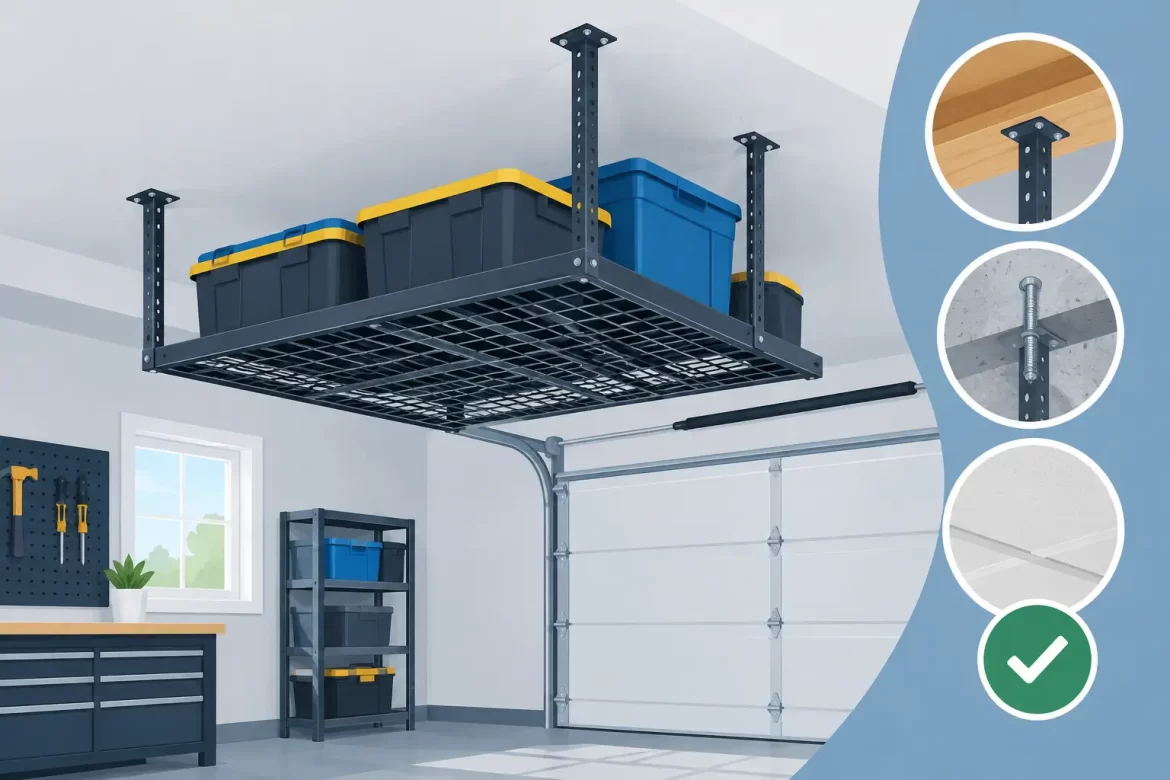
A wall shelf or freestanding cabinet can often be repositioned if it is slightly off. A ceiling-mounted rack has no such margin for error. It must be secured to framing that can support the rack and its intended load. That requires accurately locating joists, understanding the direction they run, choosing the right mounting method, and accounting for obstacles above the garage.
Many Arizona garages have details that complicate a straightforward installation: drywall-covered ceilings, uneven framing, garage-door tracks, openers, lights, attic access, sprinkler lines, or limited clearance. A rack that looks like it fits on paper may interfere with the path of the garage door or hang too low for a vehicle.
A professional installer evaluates the whole space before drilling. That includes the usable ceiling area, the position of vehicles and doors, the type of items being stored, and the rack height that makes sense for the household. The result is a storage plan built around the garage you actually have, not a generic layout from a box.
DIY Can Work for Small, Simple Projects
DIY is not automatically the wrong choice. A homeowner with construction experience, the correct tools, and a light-duty storage need may be comfortable installing a small shelf or rack. If you understand framing, can safely work overhead, and are willing to spend the time measuring and assembling, the upfront cost may be lower.
The trade-off is that you take responsibility for every part of the project. You need to confirm the product’s safe working limit, follow its mounting instructions precisely, use appropriate fasteners, and avoid loading the rack beyond what the ceiling connection can safely support. You also need a second person for many installations. Heavy steel components are awkward to lift and hold in position overhead.
DIY becomes less attractive as the rack gets larger, heavier, or more heavily loaded. A low-cost rack may seem like a bargain until it shakes when the garage door moves, swings when you place bins on it, or forces you to limit what you can store. A ceiling storage system should make life easier, not give you another item to worry about.
The Hidden Cost of Doing It Twice
The price of a DIY kit is not always the full price of a DIY project. Add measuring tools, a stud finder, drill bits, ladders, anchors or lag screws, help from another person, and several hours or a full weekend of work. If the first location does not work, patching drywall and relocating the rack can add more time and expense.
There is also the cost of choosing the wrong size. A rack that is too shallow may not hold standard storage totes efficiently. One that sits too close to the garage door can restrict access. One mounted too low can make a garage feel cramped or create clearance issues. Professional planning prevents these expensive do-overs before installation begins.
What Professional Installation Changes
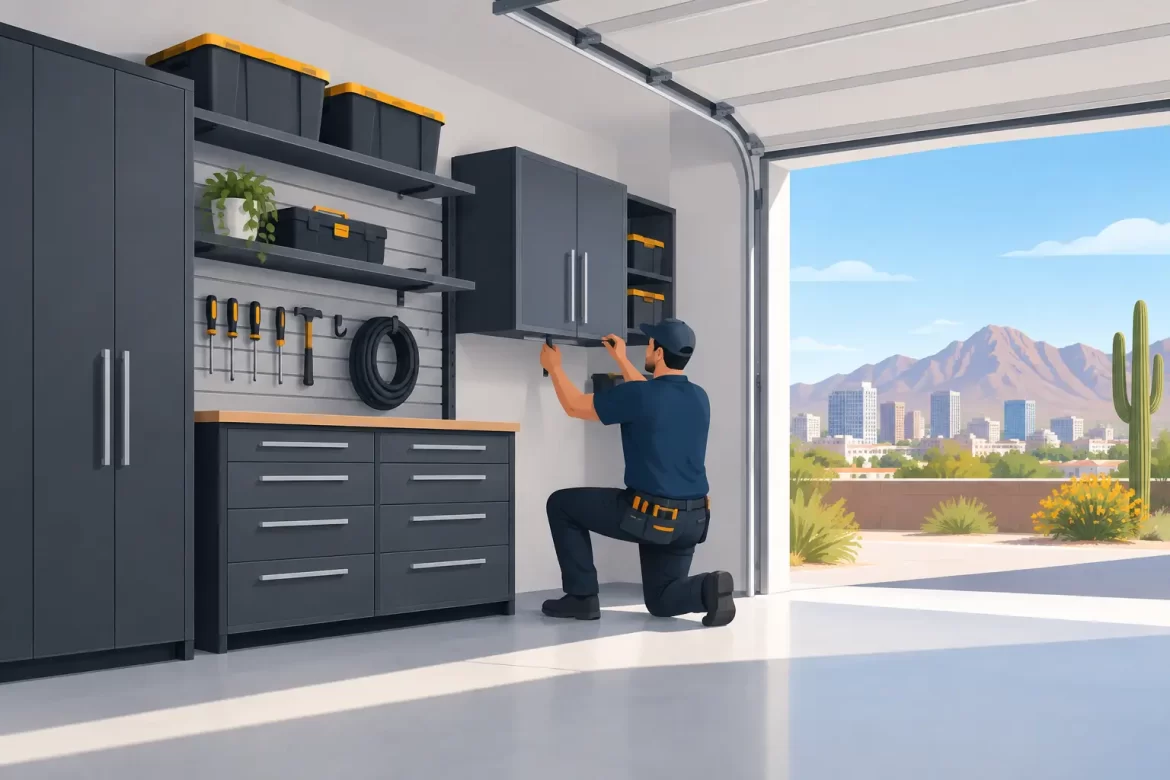
Professional installation is not simply paying someone else to assemble a rack. It is a complete approach to safety, layout, and long-term function. The installer can recommend rack dimensions and placement based on what you need to store, then mount the system correctly and verify that it is secure before it is loaded.
With Overhead Storage of Phoenix, homeowners receive a heavy-duty ceiling-mounted storage system designed for real garage loads. The company’s 4-by-8 overhead racks are built with 14-gauge steel, boltless shelving frames, a white powder-coated finish, and anti-shake decking. They have a stated safe working limit of 1,000 pounds and are tested up to 2,000 pounds in perimeter-mounted configurations.
Those specifications matter because overhead storage is only as good as its stability. A rack that shakes or swings can make homeowners hesitant to use the storage they paid for. A strong frame, secure mounting, and anti-shake construction create a solid storage platform for the bins and bulky items that typically take over a garage.
Professional installation also saves a homeowner from working on a ladder while handling long, heavy components. That is especially valuable in a Phoenix garage, where warm temperatures can make a physically demanding weekend project even less appealing. The crew handles delivery, setup, assembly, mounting, and cleanup so you can put your newly organized space to use.
Safety Is About More Than a Weight Rating
A posted weight limit is useful, but it should not be the only factor in your decision. The way weight is distributed matters. So does the condition of the ceiling structure, the connection points, the rack design, and the way items are placed on the decking.
Heavy items should be spread across the rack rather than concentrated in one corner. Containers should be secured enough that they cannot shift, and frequently used items should remain within practical reach. Your storage plan should also leave clear space around garage-door hardware, vehicles, and walkways.
Professional guidance helps match the system to the load. A homeowner storing lightweight holiday bins has different needs than someone storing camping equipment, car-care supplies, large coolers, or multiple heavy totes. The strongest setup is one designed for the items you own and installed with the structure of your garage in mind.
Stability Makes Everyday Use Better
The benefit of a stable rack is not limited to worst-case safety. It changes how the garage feels every day. You can open and close the garage door without watching the storage above for movement. You can park in the space below without navigating piles of bins. You can retrieve a seasonal item without rearranging the entire garage floor.
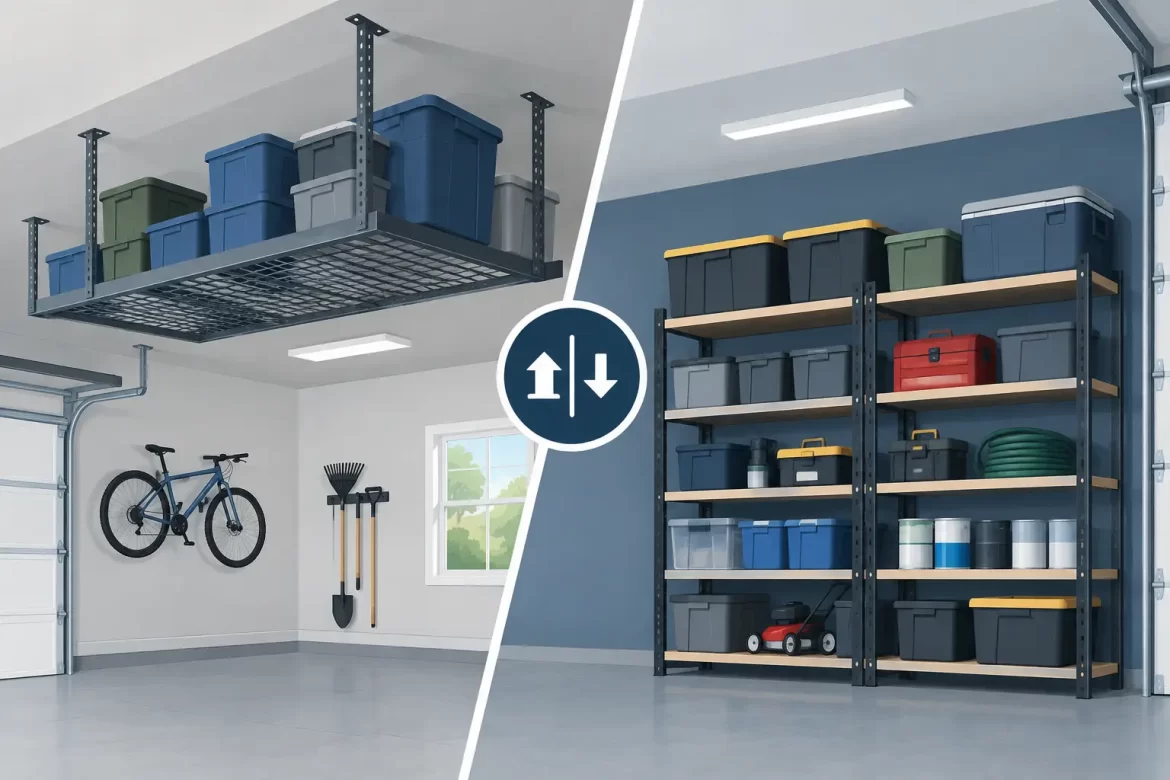
That is the practical value of moving storage overhead. It creates usable square footage where it matters most. Bikes, vehicles, workbenches, fitness equipment, and household projects have more room because the items you do not need every week are no longer underfoot.
How to Decide Which Option Fits Your Garage
Choose DIY only if the project is genuinely within your experience level and the system is appropriate for a lighter, simpler application. Be honest about the time, tools, and installation knowledge involved. Saving money upfront is worthwhile only if the finished rack is secure, well placed, and capable of holding what you plan to store.
Professional installation is the stronger choice when you want large-capacity overhead storage, have limited time, are unsure about ceiling framing, or want a clean finished result without the risk of trial and error. It is also the practical option for homeowners who want the garage organized quickly and correctly the first time.
Before choosing either route, take inventory of what is on your garage floor. Measure the largest totes and bulky items, think about how often you need access to them, and note where garage doors, lights, and vehicles need clearance. Those details will tell you far more than a rack’s price tag alone.
A well-installed overhead system does more than hold boxes. It gives your garage back to you. If you are ready to clear the floor, protect your belongings, and use your space with confidence, request a free estimate and let a local storage professional build a solution that is made for the way your household lives.