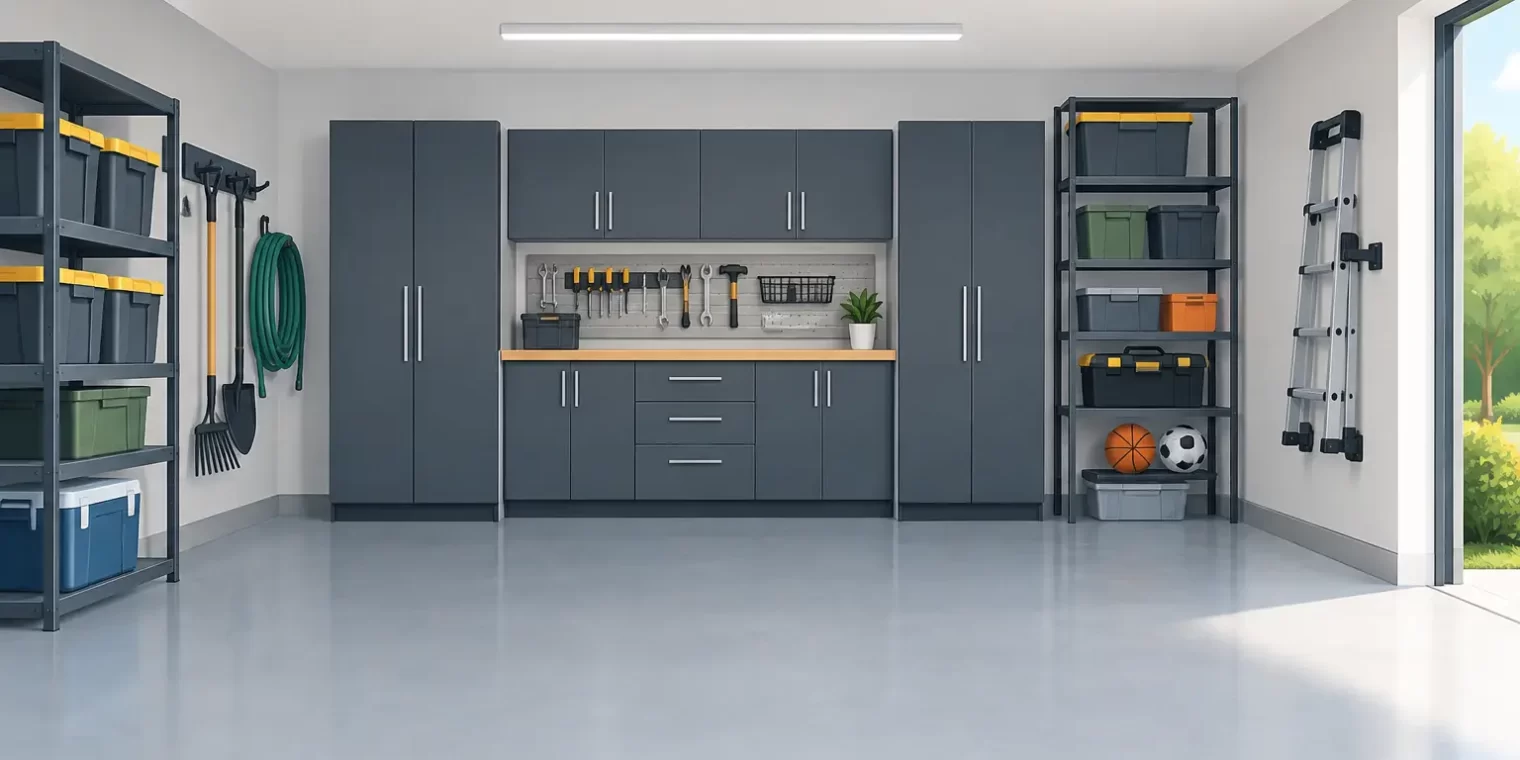
A garage should make life easier, not force you to squeeze past holiday bins, camping equipment, sports gear, and boxes you have not opened in years. The right garage storage changes that fast by taking bulky, occasional-use items off the floor and putting the open square footage back to work.
For Phoenix-area homeowners, overhead storage is often the most practical answer. It uses the unused space near the ceiling without consuming room needed for vehicles, workbenches, freezers, bikes, or the everyday gear that comes and goes through the garage.
Why Floor-Level Storage Stops Working
Most garages become cluttered one reasonable item at a time. A few storage totes line one wall. Then come the coolers, folding chairs, kids’ gear, tools, seasonal decorations, moving boxes, and supplies for home projects. Before long, there is no clear place to park, walk, or find what you need.
Floor shelving can help with smaller items, but it has limits. It takes up valuable wall and floor space, and deep shelves can become another place where belongings disappear behind other belongings. Plastic shelving may be fine for light supplies, but it is not the right solution for heavy bins, bulky equipment, or long-term household storage.
Ceiling-mounted racks solve a different problem. They move items that do not need daily access upward, leaving the floor available for the way you actually use your garage. That means clearer parking areas, easier sweeping, safer walkways, and less time shifting piles just to reach one container.
What Belongs in Overhead Garage Storage?
The best candidates are items you need to keep but do not need to reach every week. Seasonal decorations, luggage, camping gear, keepsake boxes, coolers, patio cushions, off-season sports equipment, and extra household supplies are all strong choices.
In Arizona, overhead racks also make sense for items that would otherwise crowd closets or spare bedrooms. Holiday décor may only come down once a year. Pool accessories may have an off-season. Family mementos and records deserve a stable home, but they do not need to sit in the middle of the garage floor.
There is a trade-off: items stored overhead should be manageable to lift safely or retrieve with a sturdy ladder. Put frequently used tools, daily recreation gear, and anything needed during an emergency at a reachable height. The goal is not to hide everything. It is to give every item a sensible place.
Strength and Stability Matter Over Your Head
Not all overhead racks are built the same, and this is not an area where homeowners should settle for a lightweight solution. A ceiling storage system carries weight above vehicles, walkways, and valuable belongings. Its steel construction, mounting method, hardware, deck design, and load rating all matter.
A heavy-duty rack should be designed to stay stable, not shake or swing every time the garage door moves or someone walks nearby. Wobbling is not just annoying. It can make loading difficult, cause stored items to shift, and raise concerns about the system’s long-term performance.
Overhead Storage of Phoenix installs heavy-duty OHSP rack systems made with 14-gauge steel, boltless shelving frames, white powder-coated finishes, and anti-shake decking. Its 4-by-8 racks have a stated safe working limit of 1,000 pounds and are tested up to 2,000 pounds in perimeter-mounted configurations. Those details matter because a rack is only as dependable as its structure and installation.
Weight ratings should always be treated responsibly. A safe working limit is not an invitation to pile random items onto a rack until it is full. It is a measure that helps homeowners plan storage confidently when the rack is properly installed and loaded thoughtfully.
Think About Weight Distribution
Store heavier, compact bins evenly across the rack rather than concentrating them in one corner. Use durable totes with secure lids instead of damaged cardboard boxes that can weaken in garage conditions. Keep a simple idea of what is stored above so you do not overload one section over time.
A well-organized rack is easier to use and safer to maintain. Group similar items together, place the most frequently retrieved bins closer to the edge, and avoid stacking loose objects where they could shift.
Professional Installation Is Part of the System
A ceiling rack is not a standard shelf that can be attached anywhere with a few screws. The installer needs to identify suitable structural mounting points, account for ceiling height, consider garage door clearance, and make sure the rack location works with lights, attic access, door openers, and vehicles.
That is why professional installation has real value. The technical work is handled by an experienced team that understands how to secure the system correctly and position it for everyday use. Homeowners get a finished storage solution without spending a weekend measuring joists, sourcing hardware, drilling overhead, and hoping the final result is level and secure.
Placement also depends on the garage. A rack over the hood of a parked vehicle may work well in one layout, while a side-wall or perimeter-mounted configuration is better in another. Garages with tall ceilings can support deeper storage plans, while lower ceilings require more careful attention to headroom and access.
Plan Your Garage Storage Before Installation
The most effective projects start with a quick sort. You do not need to empty every box and create a picture-perfect garage before requesting an estimate. But knowing what you want to store helps determine the right number of racks, dimensions, and placement.
Start by separating belongings into three groups: keep and store, donate or discard, and move elsewhere in the home. Be honest about items that are broken, expired, or no longer useful. Overhead storage is valuable space, and it should be reserved for things worth keeping.
Then estimate the volume of the items that remain. Count large bins, measure unusual equipment, and consider what will be added later. Families often gain more from two well-planned racks than one rack packed beyond convenience. A little growth capacity keeps the garage organized after the first round of cleanup.
Avoid These Common Mistakes
Do not buy a rack solely because it is the lowest price. Thin materials, vague load claims, and unstable designs can create headaches later. A garage storage system should be judged by its structure, mounting, usable capacity, and ability to remain steady under real household use.
Do not store heat-sensitive materials overhead if the garage gets extremely hot. Phoenix garages can experience serious heat, especially near the ceiling. Check product labels and avoid placing flammable materials, sensitive electronics, candles, aerosol products, or anything that should not be exposed to high temperatures in that space.
Finally, do not turn the rack into a mystery shelf. Label containers on multiple sides. A simple label such as “Christmas lights,” “camping kitchen,” or “tax records” prevents unnecessary climbing and makes the system useful year after year.
Make the Rest of the Garage Work Better
Overhead racks are most powerful when they support a larger plan for the room. Once bulky, seasonal belongings are off the ground, the remaining floor space becomes easier to organize around daily life.
Keep frequently used tools near a work area. Place bikes where they can be removed without moving cars. Reserve a clear path from the garage entry door to the home. If you use the garage for projects, keep an open zone where you can set up a folding table or roll in equipment.
The result is not just a cleaner-looking garage. It is a garage that can hold cars, support hobbies, protect stored belongings, and reduce the frustration of searching through clutter. For many homeowners, reclaiming that space feels like adding a usable room without changing the footprint of the house.
A strong overhead storage system gives your belongings a secure place above the action, so the garage below can finally do the job it was meant to do. A free professional estimate is a practical first step toward a safer, clearer, harder-working space.